All of the Journal

Nature · October 24, 2021

Autumn in Arolla: the forest of stone pines and larches

From mid-October, the forest beside the hotel turns from gold to fire before the snow. A small tribute to the season when Arolla plays its finest score.

By Patricia · 4 min read

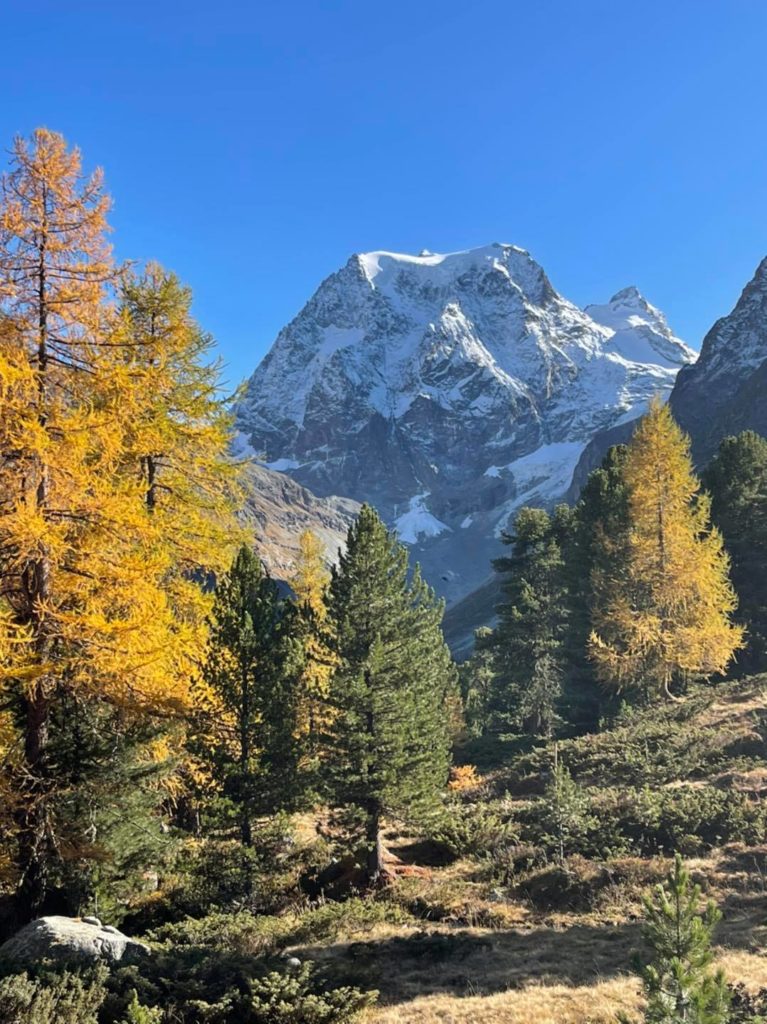
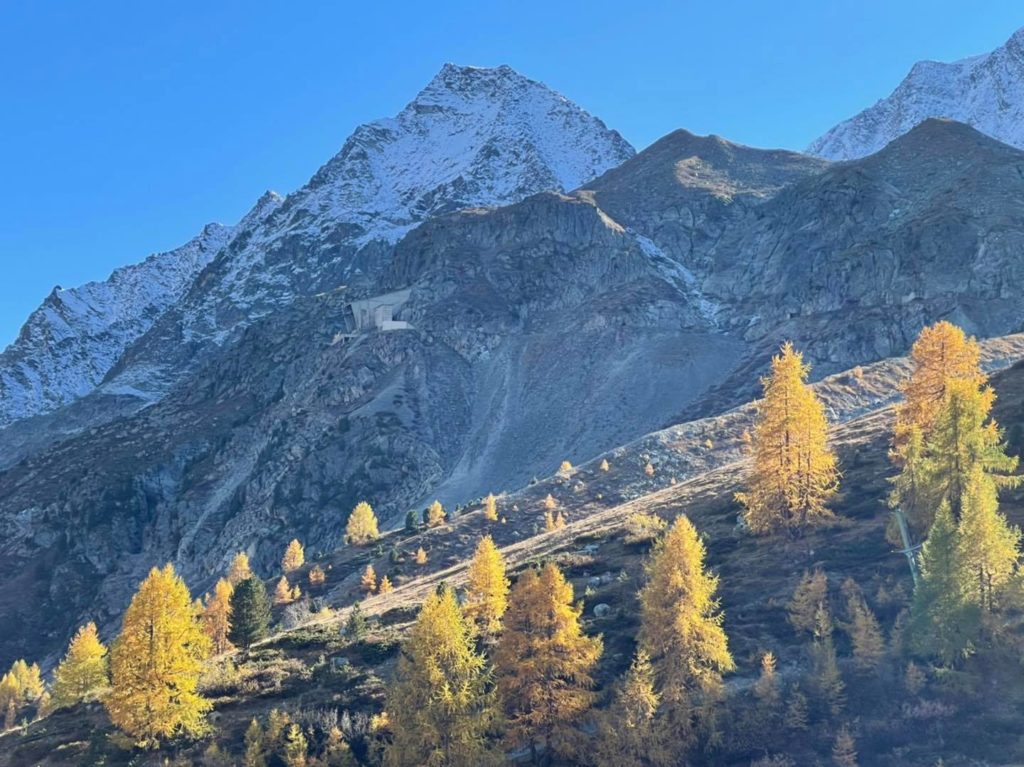
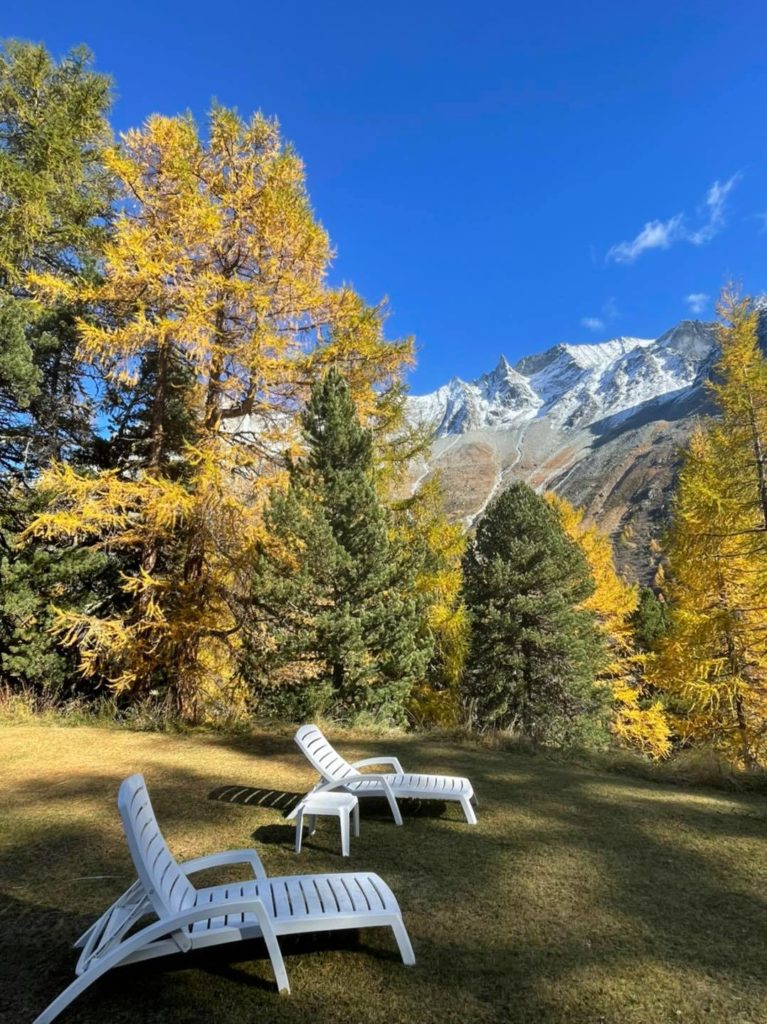
Snow-capped peak of Arolla framed by the larches of the forest

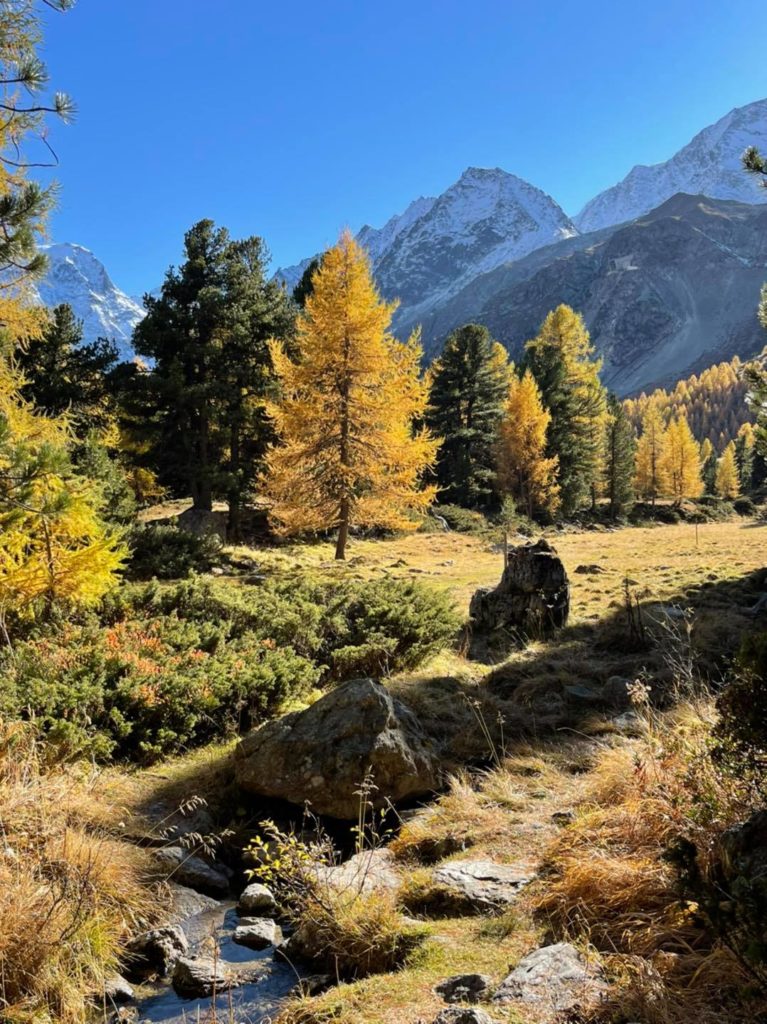
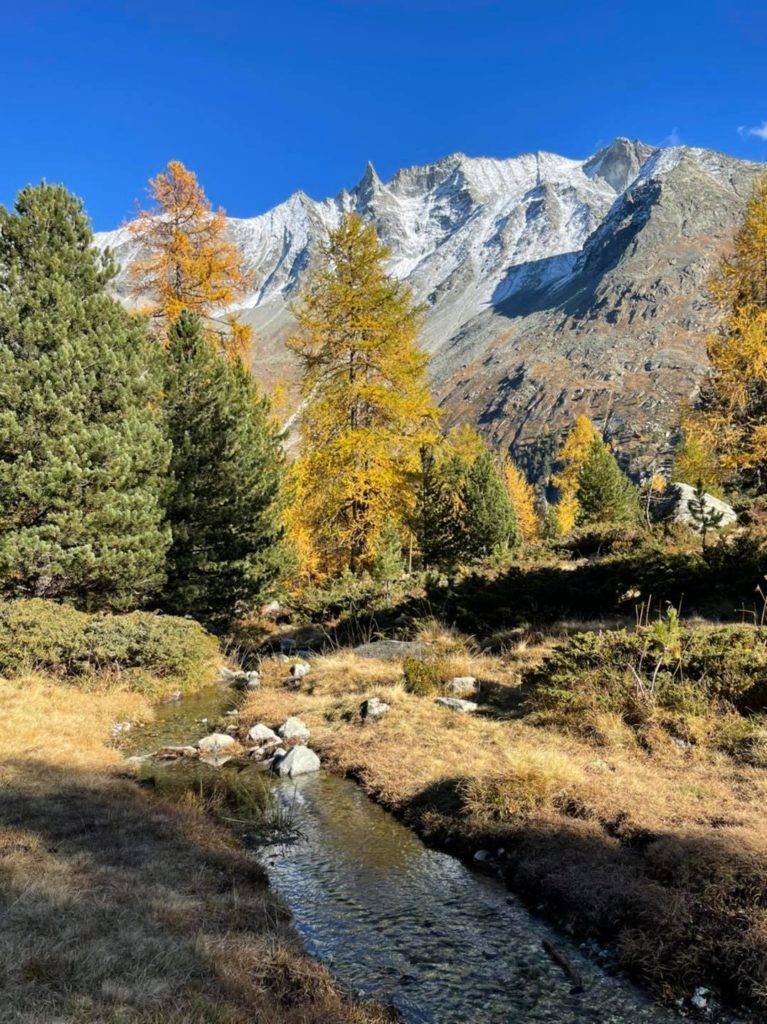
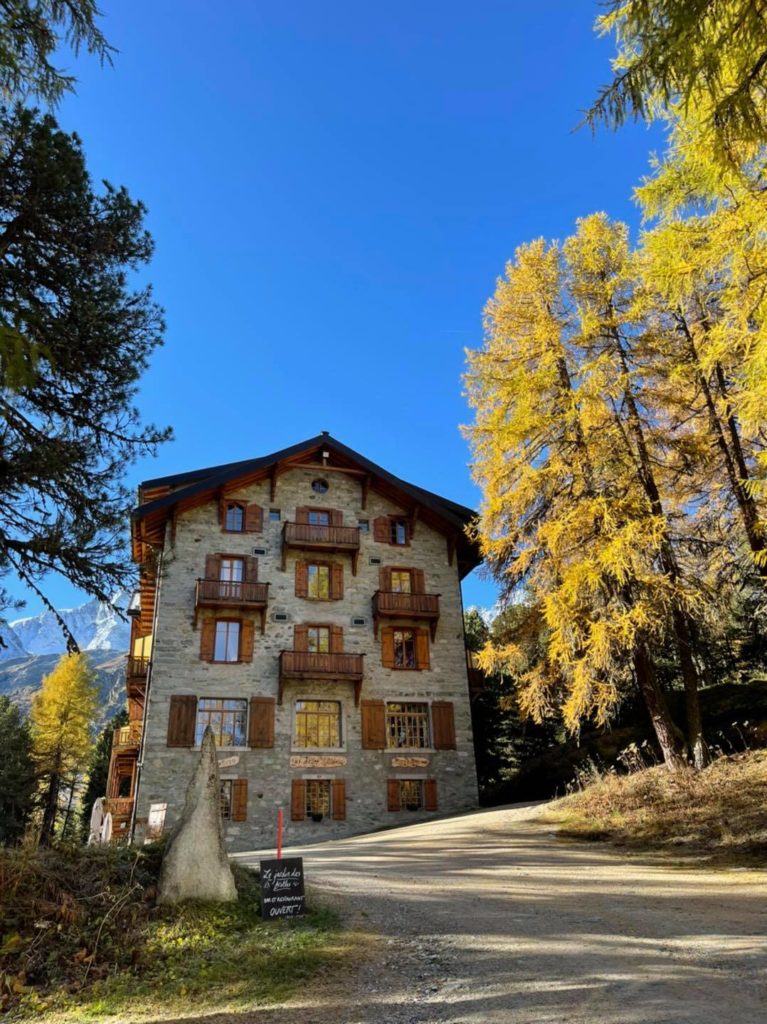
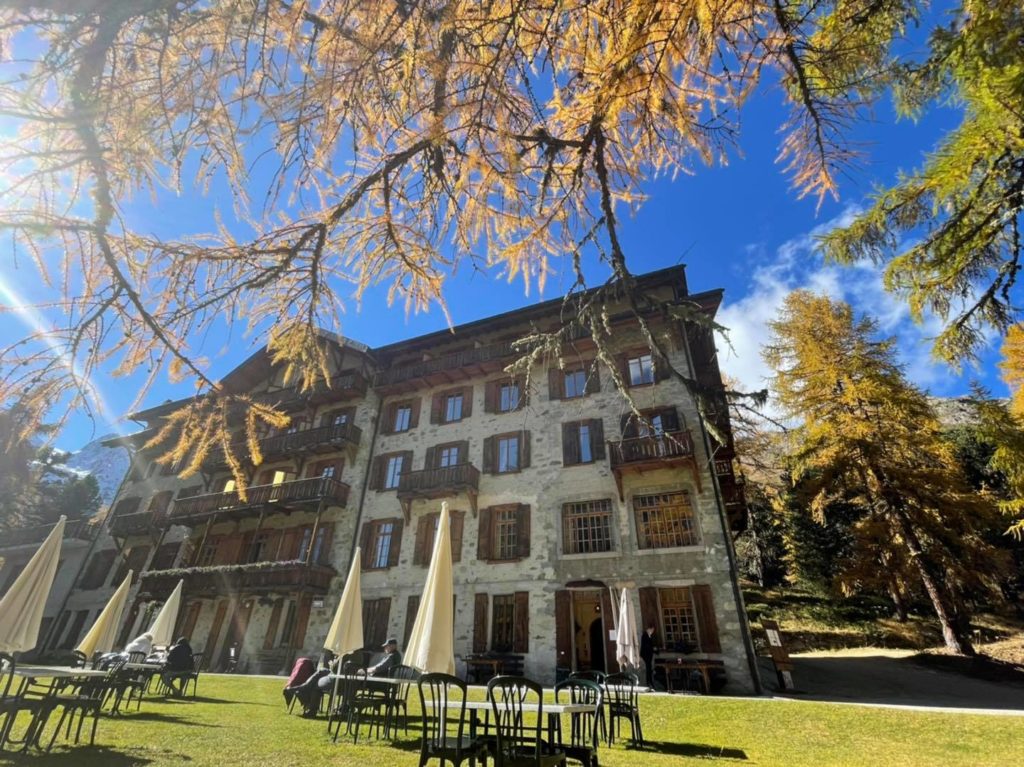
The Swiss stone pine — the arolle — is the emblematic tree of Arolla; it gave the village its name. The larch, meanwhile, is the tree of autumn in the Valais Alps: the only conifer to shed its needles, it first turns them gold before letting them fall. Together they make up the forest that adjoins the Grand Hôtel & Kurhaus, at nearly 2,000 metres. And every year, at the same hour, they offer one of the finest sights of the season.

When the mountain changes colour

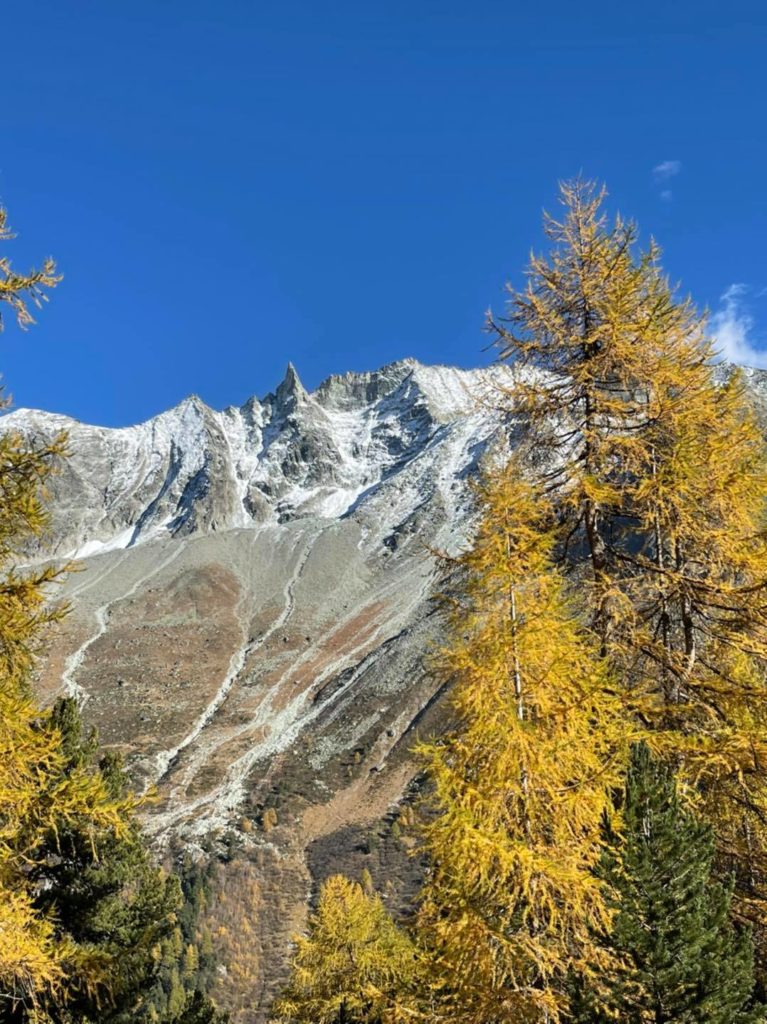
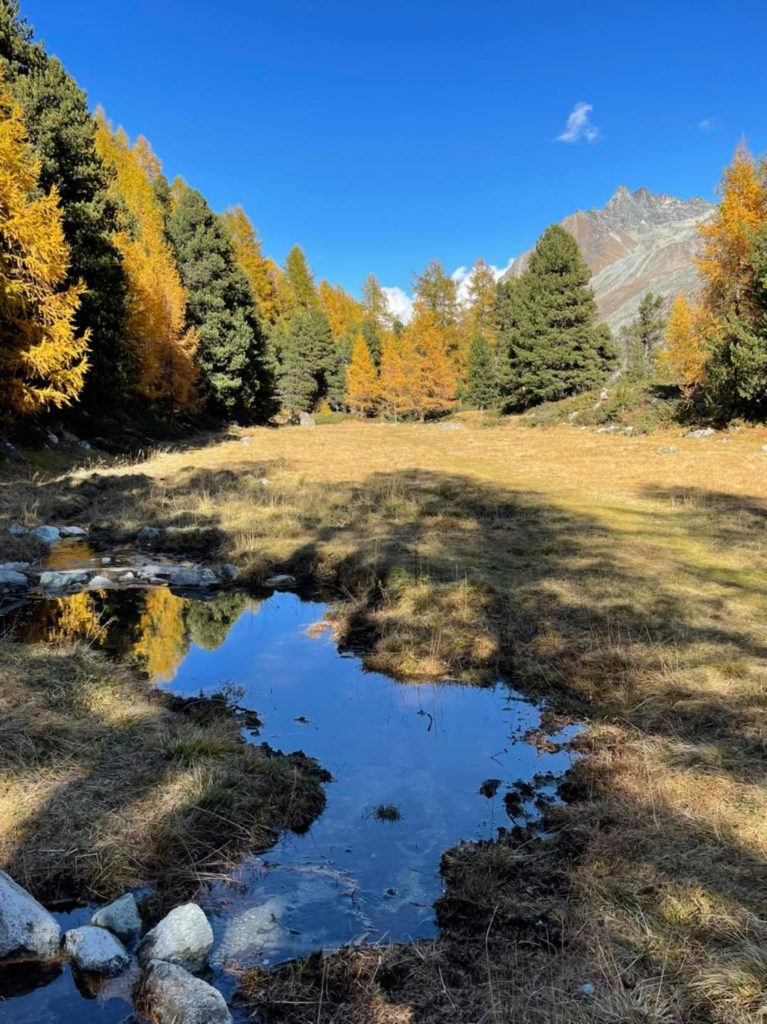
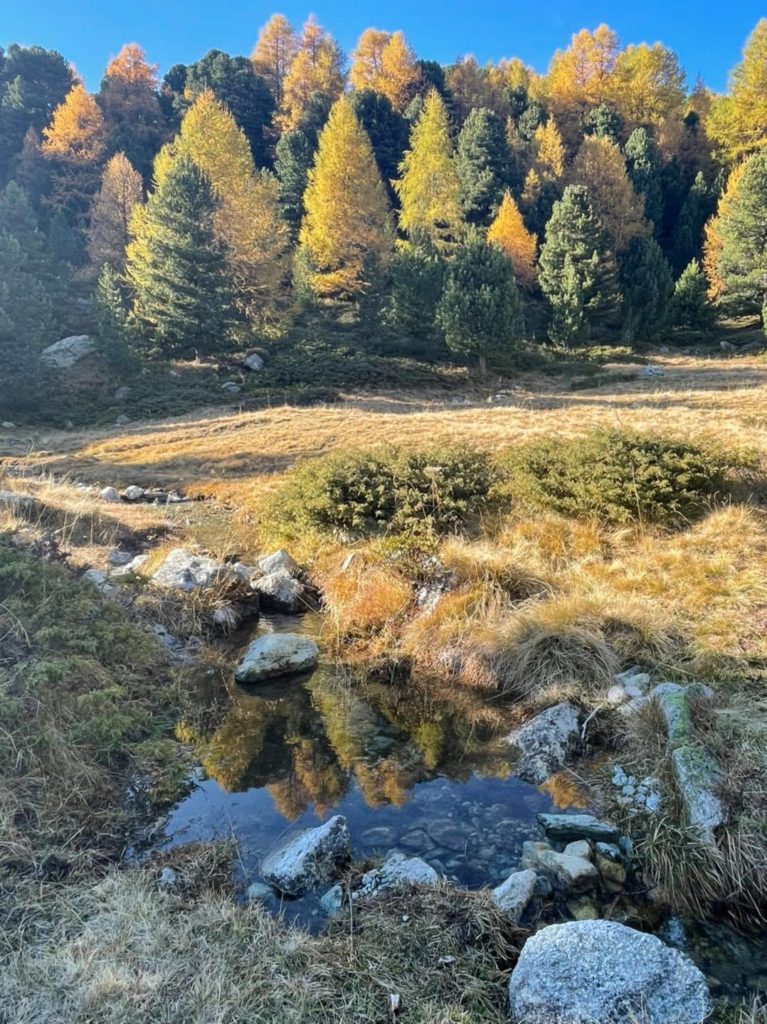
It begins with the ground. At the first chill, the bilberry shrubs that carpet the undergrowth turn a flaming red, spreading a coppery layer between the trunks. Then come the crowns: the forests of stone pines and larches dress themselves in gold. The stone pine stays a steady dark green all year long; it is the larch that catches fire, passing from soft green to golden yellow, then amber, before standing bare for winter.

From mid-October, a singular spectacle plays out in Arolla before the snow comes to cover the golden landscapes.

This window is brief — a few weeks at most. It opens around mid-October and closes with the first snow, which dusts the summits and soon covers the golden landscapes. It is precisely this fragility that gives it its worth: walking beneath the larches, you know that nothing will last.

The gold of the larches, the white of the glaciers

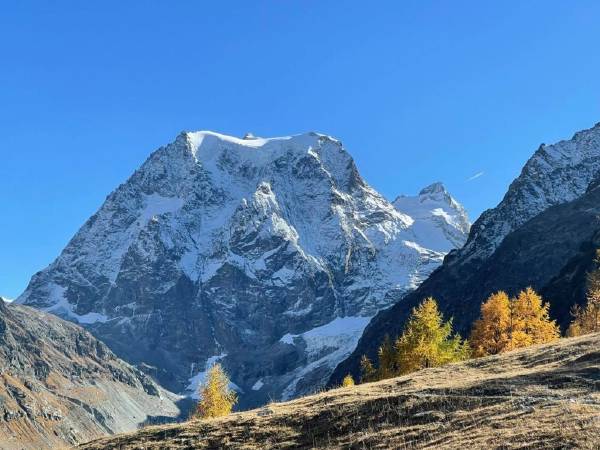
The autumn light, lower and softer, sharpens the contrast. On one side the golden yellow of the larches; on the other, already, the white of Mont-Collon and the Arolla glaciers. Between the two, the red of the bilberries and the deep green of the stone pines. Rarely is the mountain’s palette as complete as in these few days.

  • The Swiss stone pine (Pinus cembra): the emblematic pine, evergreen all year, which can live for centuries.
  • The larch: the Alps’ deciduous conifer, which turns yellow and then sheds its needles in autumn.
  • The bilberry shrubs of the undergrowth: first to turn, reddening with the cool nights.
  • As a backdrop: Mont-Collon and the Arolla glaciers, already dusted with white.

A forest at the doorstep

The stone pine forest adjoins the Grand Hôtel & Kurhaus directly: you step into it on foot from the garden, with no car or transfer. It is a contemplative, silent world, where you walk slowly, camera in hand. Photographers know this and return each autumn to catch the light. Others simply breathe in the scent of resin and needles, and look.

It is perhaps the finest season to understand Arolla. Summer has its flowers and its hikes; winter, its skiing and its snowy silence. But autumn plays its finest score — short, intense, and renewed every year.

To live this transition, nothing beats a stay at the Grand Hôtel & Kurhaus in mid-October: a few days to walk beneath the golden larches, return to warm up in the lounge, and watch the glaciers grow a little whiter each morning.

Your stay

Book your escape to Arolla

CallWrite